
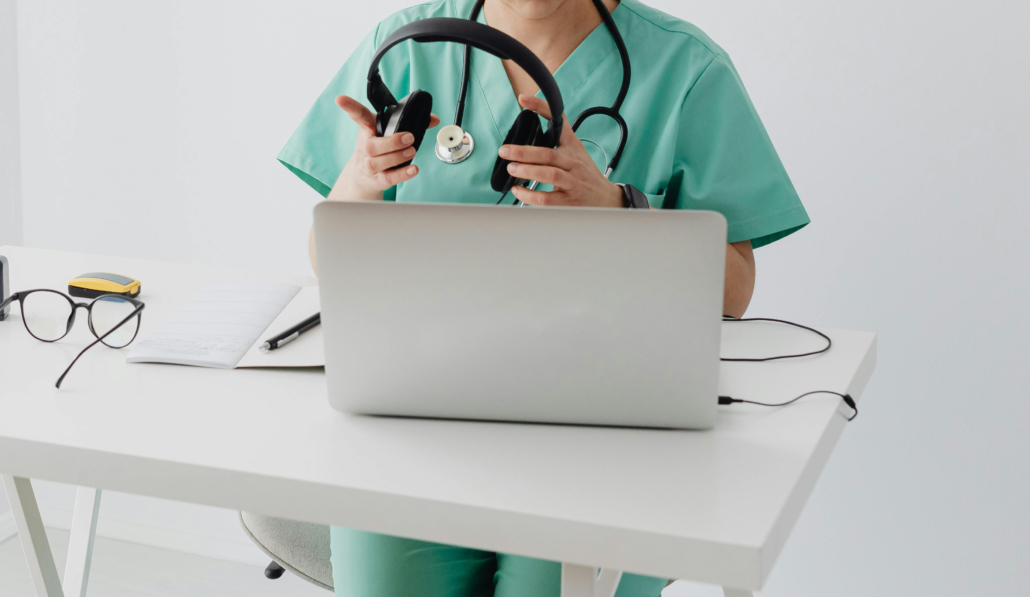
Remote patient monitoring: how it improves follow-up and continuity of care
Reading time: 3 minuti
The evolution of healthcare delivery models is assigning a growing role to remote patient monitoring, especially in management pathways for chronic or complex conditions and during follow-up phases.
The growing widespread adoption of healthcare technologies enables not only the remote transmission of clinical data via telemonitoring devices, but also the activation of continuous care models through remote monitoring tools based on direct interaction with healthcare professionals1,2.
These modalities are also applied within Patient Support Programs (PSPs), where remote monitoring, managed by healthcare professionals, helps strengthen clinical follow-up and support long-term therapy management and treatment.
REMOTE MONITORING AND CONTINUITY OF CARE IN PSPS
Indeed, one of the main limitations of traditional follow-up models is the episodic nature of clinical monitoring, which can make it more difficult to promptly identify any changes in the patient’s condition.
Conversely, remote monitoring ensures continuity of care, overcoming physical, geographical, and organizational barriers, and facilitating the relationship between the patient and the healthcare system1,2.
In this context, remote monitoring tools represent a particularly effective solution when integrated into a structured program managed by healthcare professionals. The latter can observe the patient, assess their clinical condition, verify treatment adherence, and provide personalized guidance (patient-centered medicine3), while maintaining a continuous relationship even from a distance.
Remote monitoring combines direct interaction modalities with telemonitoring devices — such as wearables, wearable sensors, and portable devices — which enable the collection of physiological parameters such as blood pressure, heart rate, blood glucose levels, and physical activity4.
The collected data are transmitted to a dedicated digital platform and made immediately accessible to clinicians, integrating the gathered information and supporting a more comprehensive and timely assessment of the patient’s condition, also with a view to preventing clinical events.
THE BENEFITS OF REMOTE MONITORING FOR PATIENTS AND HEALTHCARE PROFESSIONISTS
The introduction of remote monitoring models can generate significant benefits for all stakeholders involved.
For patients, the possibility of being monitored remotely through structured contacts reduces the need to travel to healthcare facilities, facilitating the daily management of therapy and/or treatment and improving adherence. Furthermore, the presence of a constant point of reference helps strengthen confidence in the care pathway.
For healthcare professionals, the availability of continuously collected clinical information — integrating objective data and observations derived from patient interactions — allows for a more comprehensive overview of disease progression and supports more timely clinical decisions2.
Furthermore, these models can contribute to reducing hospitalizations and the number of in-person visits, while simultaneously maintaining high levels of patient safety1.
DIGITAL PLATFORMS AND ORGANIZATION OF HEALTHCARE SERVICES
Remote monitoring relies on dedicated digital platforms that integrate clinical data collection with interaction tools between patients and healthcare professionals1.
These platforms represent a central tool for enabling the figures involved in the care pathway to actively follow the patient and to prevent and detect any critical issues1,2. To support these activities, features such as chatbots or virtual assistants can also be integrated2, which are useful for providing first-level information and improving service accessibility, for example, by enhancing the nursing contact center even outside traditional hours.
The objective of these solutions is not to replace the work of healthcare professionals, but rather to support their activity, making the management of interactions and patient needs more efficient.
These same platforms allow the clinical information collected to be shared among the different professionals involved in the care pathway, facilitating coordination between healthcare figures2.
REMOTE MONITORING AND MULTIDISCIPLINARY PATIENT MANAGEMENT
Digital transformation fosters the development of increasingly multidisciplinary and holistic care models.
In this context, remote monitoring facilitates coordination among the various figures involved in care — including doctors, nurses, specialists, and community health workers — and supports the holistic management of the patient.
This approach is particularly relevant in the management of chronic diseases and in complex care pathways1, such as in the case of rare diseases, which require the contribution of multiple professionals.
CONCLUSIONS
In this scenario, remote monitoring is not merely a technological tool, but rather functions as an organizational model based on remote patient management.
Through the integration of continuous clinical data collection and direct interactions, this model helps make follow-up more proactive, coordinated, and patient-centered, supporting the evolution toward more integrated, effective, and sustainable care models1,2.
REFERENCES
- Farias FAC, Dagostini CM, Bicca YA, Falavigna VF, Falavigna A. Remote Patient Monitoring: A Systematic Review. Telemed J E Health. 2020 May;26(5):576-583. doi: 10.1089/tmj.2019.0066. Epub 2019 Jul 17.
- Rossi M, Rehman S. Integrating Artificial Intelligence Into Telemedicine: Evidence, Challenges, and Future Directions. 2025 Aug 23;17(8):e90829. doi: 10.7759/cureus.90829.
- Società Italiana di Medicina Narrativa (SIMEN). Patient-centered medicine. Disponibile su: https://www.simenitalia.it/patient-centered-medicine/ (Ultimo accesso il 17 marzo 2026).
- Serrano LP, Maita KC, Avila FR, Torres-Guzman RA, Garcia JP, Eldaly AS, Haider CR, Felton CL, Paulson MR, Maniaci MJ, Forte AJ. Benefits and Challenges of Remote Patient Monitoring as Perceived by Health Care Practitioners: A Systematic Review. Perm J. 2023 Dec 15;27(4):100-111. doi: 10.7812/TPP/23.022. Epub 2023 Sep 22.